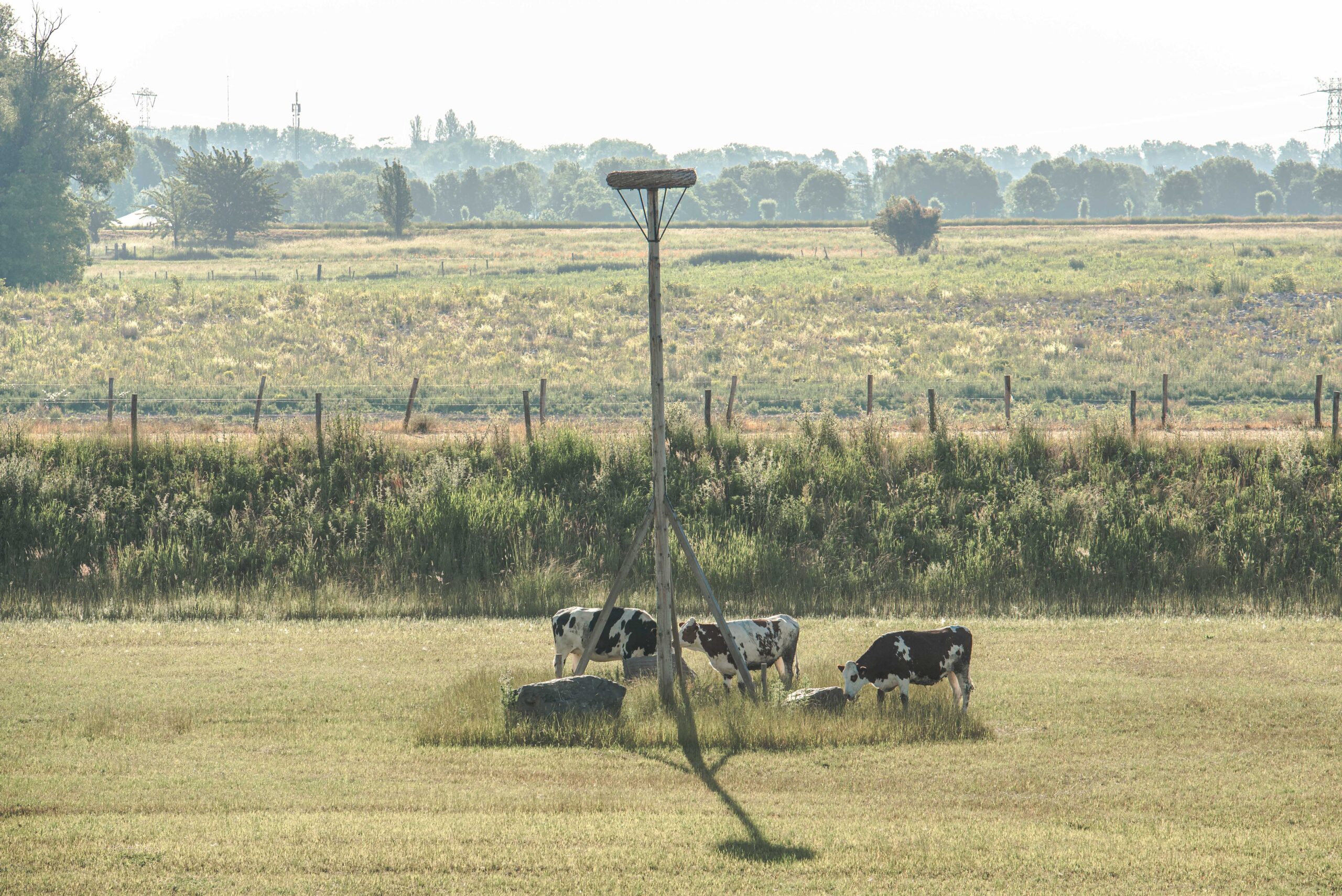

© Ben Creemers
Food landscape
What we eat, where it comes from and who produces it: you don’t always see it in the landscape. And yet farmers help shape our environment and provide us with food every day. That is why various partners are investigating the possibility of developing a “food landscape” in the RivierPark Maasvallei – an attractive, visible landscape where agriculture can be experienced and where residents and visitors can reconnect with food production.
Think of rest areas between the fields with information about what is growing, an educational trail about food, vending machines with local products or a cosy farmers’ market. The idea comes from the Farmers’ Union and the Flemish Land Agency (VLM), both of which are backing the project. At a later stage, VLM will also make concrete changes to the site through the “land use planning” instrument. Agropolis, the province of Limburg and the Regional Landscape Kempen and Maasland (RLKM) are also joining the story.

Research
To discover the level of interest, an extensive market survey is now being launched. In the first phase, residents, visitors and the tourism sector will be asked for their opinions. Residents can participate via a QR code in the municipal information leaflet or the Maasblad, a publication of the RivierPark Maasvallei and De Vlaamse Waterweg nv. In addition, outdoor posters will be placed at ten locations on both banks of the Meuse, including at ferries, cycle routes, the Visitor Centre De Wissen, the village square in Leut and the car park in Heppeneert.
Posters in public buildings and catering establishments will point the way to the online survey.
In the second half of June, surveyors will also be out and about on both sides of the Meuse, questioning passers-by directly. The aim is to collect at least 400 completed surveys from both residents and visitors.
The results of this first phase – which runs from 20 May to the end of September – will form the basis for discussions with farmers in the autumn. It is important for them to know what the local community wants and thinks before considering what role they can play and what revenue models are possible. The entire survey should be completed by early 2026.