
© Jorgo Kokkinidis
Large herbivores
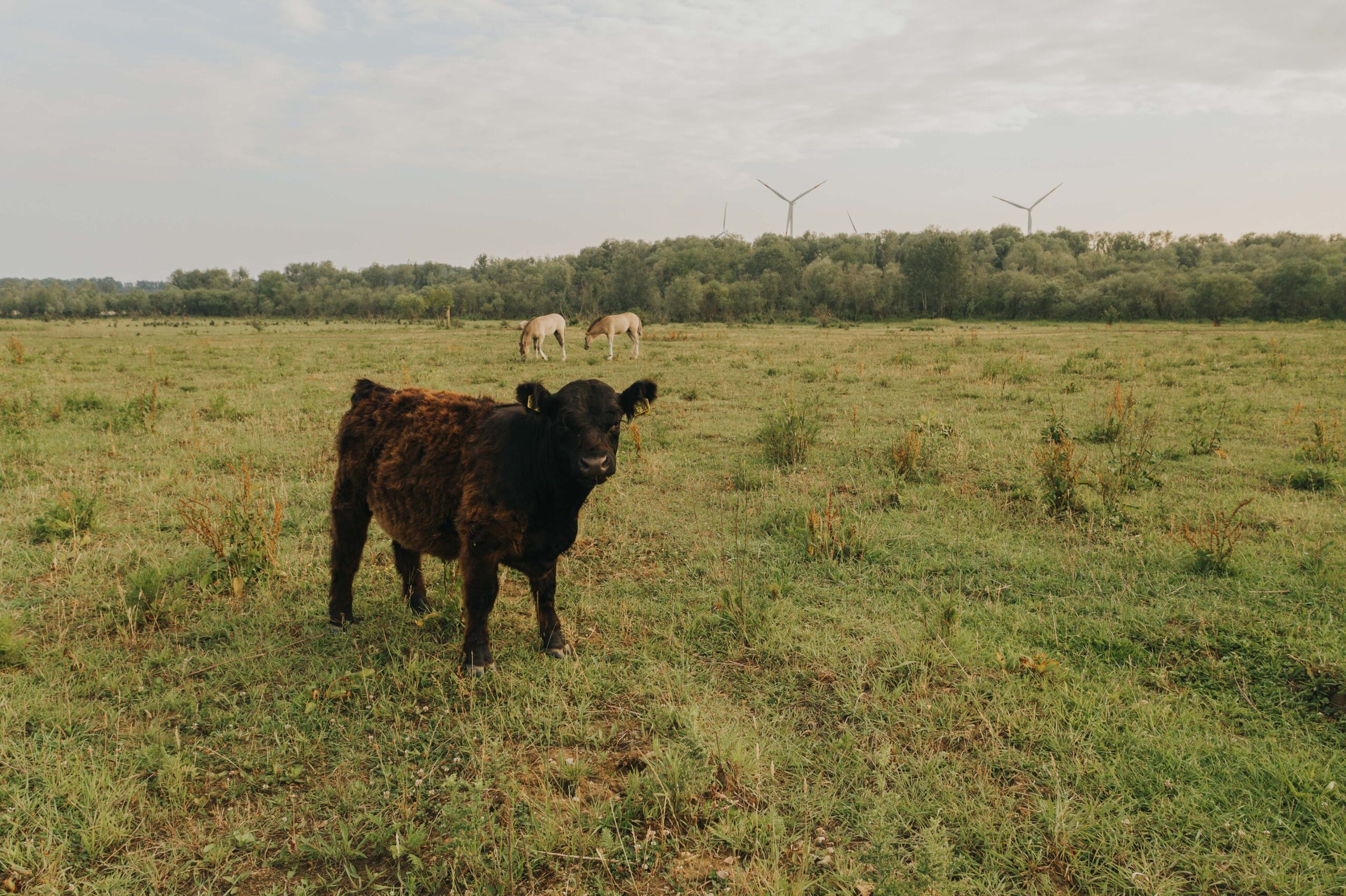
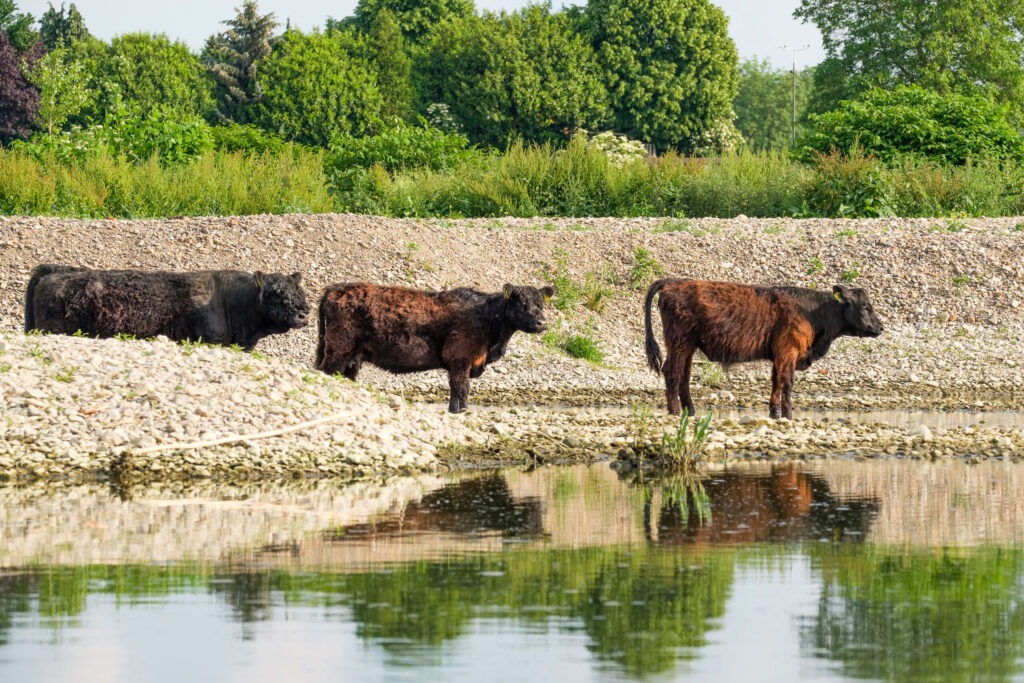
The nature reserves in the RivierPark Maasvallei are managed by Limburgs Landschap vzw, Natuurpunt, Staatsbosbeheer, Natuurmonumenten and ARK Rewilding Nederland. To effectively manage these wild nature areas, they employ “large grazers” of “large herbivores”. Along the Meuse, you will primarily see Galloway cattle and Konik horses.
Large grazers play a crucial role in the development of these new wild habitats. In winter, Galloway cattle prune trees and shrubs, leaving behind a medium-length grass sward. The Konik horses help maintain this grassland by grazing on shorter grass and snacking on the tastiest herbs. Together, they prevent the area from becoming overgrown overgrown with willows during winter. This varied grazing by both cattle and horses creates a constantly changing patchwork of open grassland, dense thickets and shrubs.
This method of nature management works only if we allow these animals to behave naturally. This means they must fend for themselves and remain wild —ideally, they should be completely unaccustomed to human interaction. If we start petting and feeding them, the animals will learn to seek food in different ways.
For instance, they might start rummaging through people’s bags in a rough and wild manner, which is definitely not a desirable experience for visitors. Such behaviour causes the large grazers to lose their strength and role in their habitat and herd, potentially leading to their removal.
What to keep in mind?
- Do not pet the animals
- Do not feed them
- Do not cross through the herd
- Always maintain a distance of at least 25 metres
- Keep dogs on a leash at all times
Large herbivores in winter
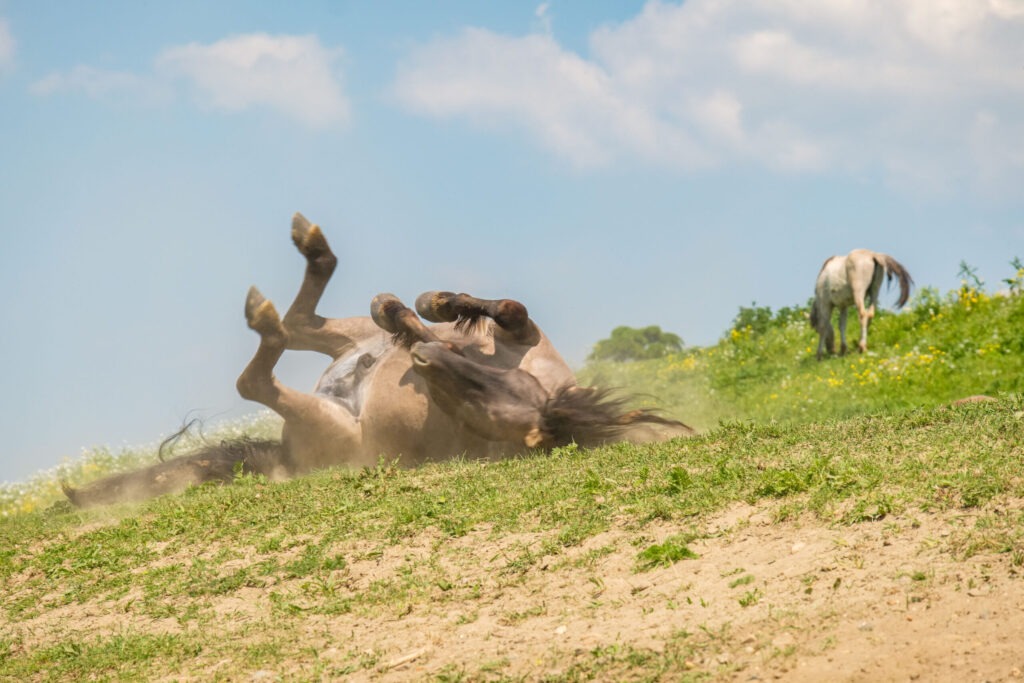
It may seem sad to see a Galloway in the snow, but don’t be fooled. Both Koniks and Galloways are fully equipped to survive winter without any assistance. During the summer months, they eat abundantly and build up fat reserves. In autumn, they develop a warm coat and know the best sheltered spots. They do not suffer from the cold; while they may lose some weight in winter, this is part of their natural cycle. Their winter diet helps them shed any excess summer weight and keeps them healthy. Therefore, supplemental feeding is not necessary! Only in extreme situations do the responsible nature managers provide additional feed.