Most of the nature reserves in the Meuse Valley are managed by Limburgs Landschap vzw, Natuurpunt, Natuurmonumenten and Staatsbosbeheer. These organisations share a common vision for nature conservation, where river dynamics and year-round grazing are key processes.
On the Flemish side, important nature reserves include Hochterbampd-Herbricht, Oude Weerd and Biesweerd, Maaswinkel-Maesbempder Greend, Mazenhoven, Negenoord-Kerkeweerd, Boyen-Veurzen (floodplain grasslands) and Bichterweerd, Koningssteen-Kollegreend and the Vijverbroek. The unique Kraaienbosje in Maasmechelen, a 1-hectare woodland, is managed by ANB and is the only hardwood floodplain forest in Flanders, known for its spring blooms.
On the Dutch side, key nature areas include the wilderness areas around Borgharen-Itteren and ‘Aan de Maas’ between Geulle and Elsloo, Meers-Maasband (gravel islands, grassland, floodplain forest), Nattenhoven, Trierveld, Roosteren-Visserweert, the Molenplas, and several smaller gravel ponds. To the north, the cross-border area Koningssteen-Kollegreend is jointly managed by Limburgs Landschap and Natuurmonumenten. Local farmers are also involved in managing some areas, like Eiland in de Maas and Boyen-Veurzen. These nature reserves are connected to other important areas like Bunderbos, National Park Hoge Kempen and Unesco Man and Biosphere Reserve KempenBroek.
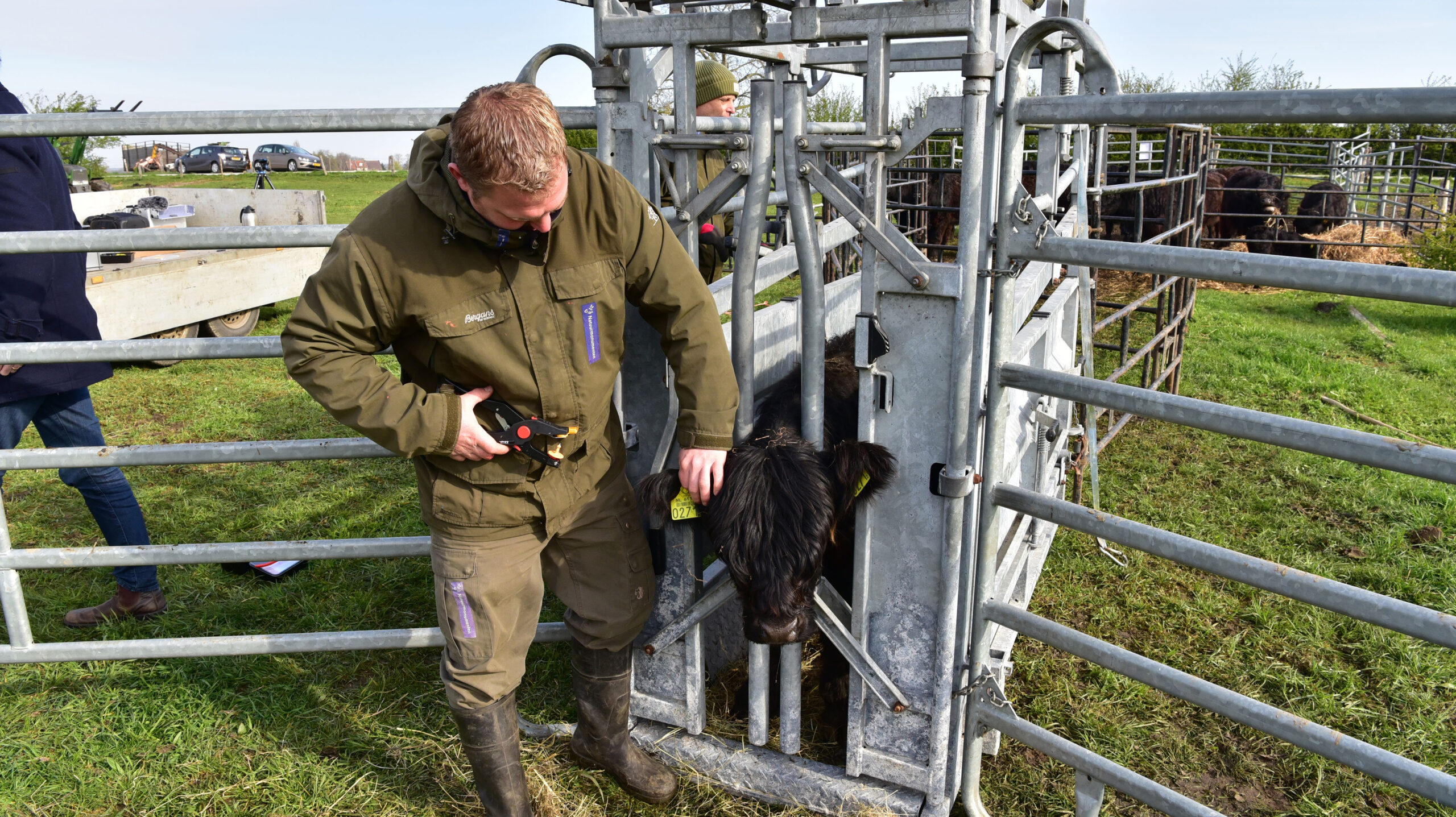
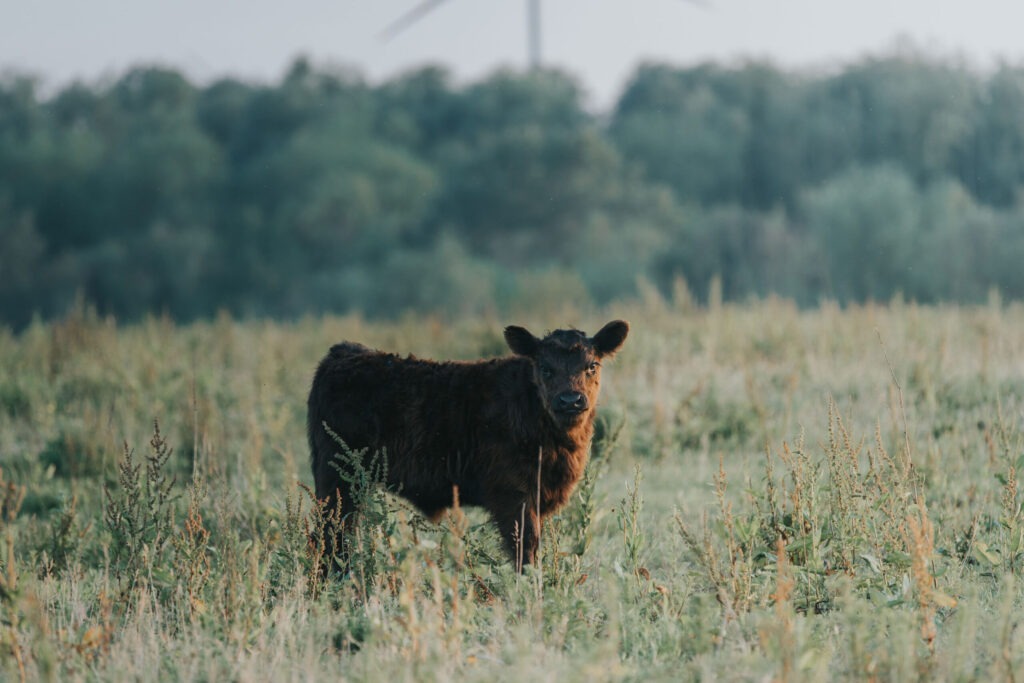
Since the 1990s, pilot projects initiated by ARK have influenced many management plans to focus on process-driven nature management. This approach emphasises natural river dynamics and grazing, with minimal intervention—only as much as is needed to maintain species diversity and landscape variety.
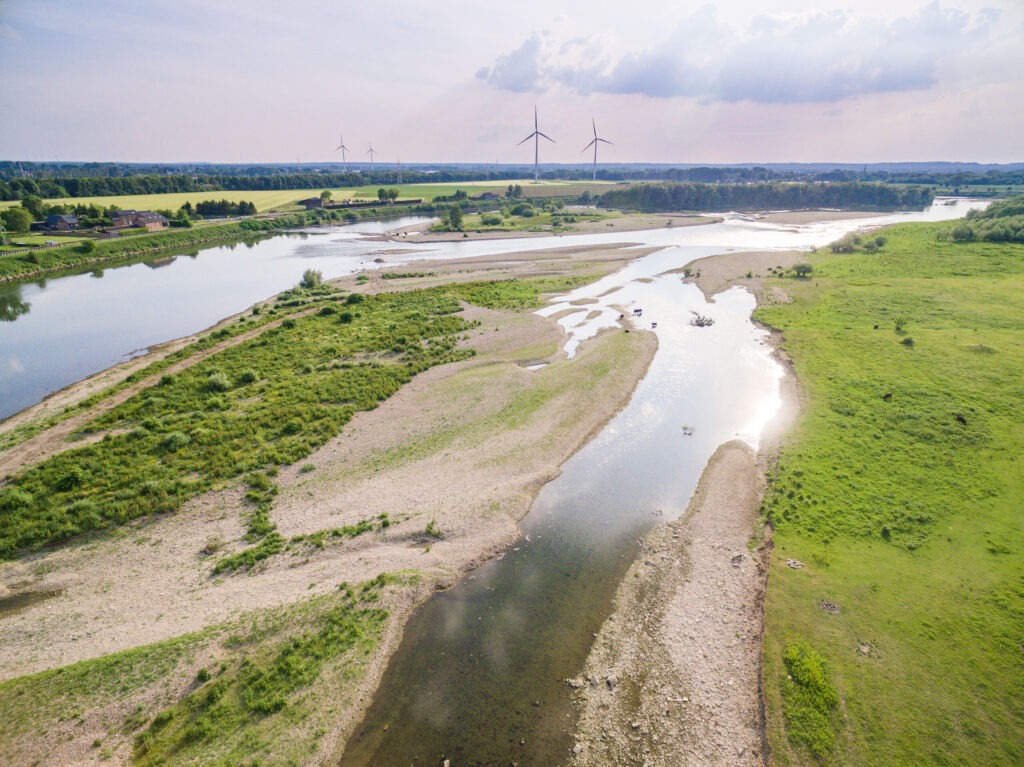
Aerial view of Meers
Want to learn more about nature management and rewilding? (Dutch video)