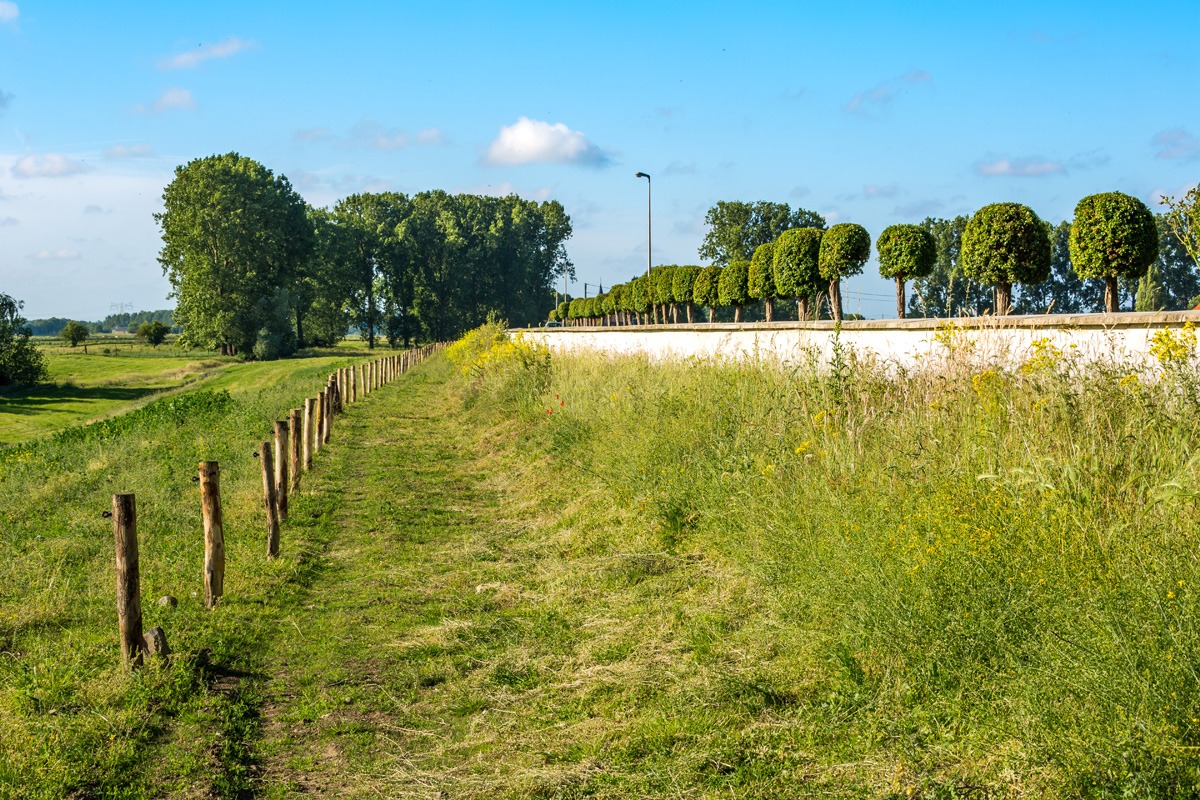
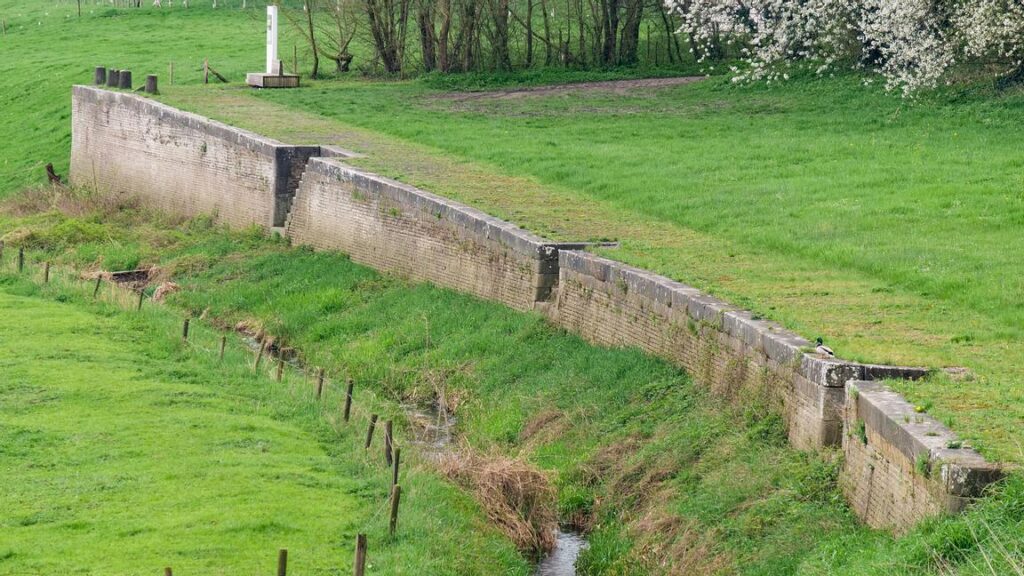
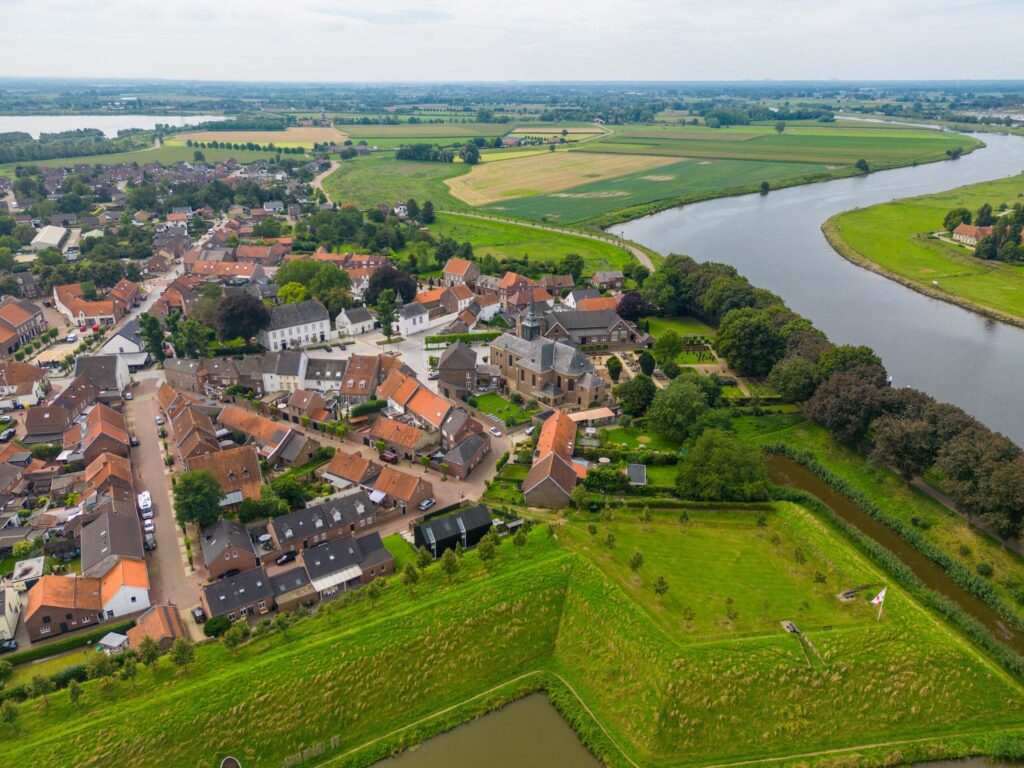
The landscape of the Meuse Valley has been shaped by the Meuse River. For centuries, human settlement in the area adapted to the river’s unpredictable nature. The region is distinguished by unique features like the old Meuse channels and compact Meuse villages.
Did you know that T-shaped street patterns (where the church is not centrally located) or semi-circular roads and streams (following old meanders) are typical characteristics of the Meuse Valley?
The 20th century brought dramatic changes to the landscape, including large-scale gravel extraction, mining, agricultural expansion, population growth and urbanisation. These transformations are still visible in the landscape today. Additionally, shipping on the Meuse gradually disappeared as canals like the Zuid-Willemsvaart, Albert Canal and Juliana Canal offered more stable routes for the growing size of ships. In some places, remnants of old quays and ferry landings still stand as a testament to the river’s once-bustling trade routes.
Today, recreational boating is permitted from Maaseik onwards, but the section between Maastricht and Maaseik remains closed to navigation.
Heritage in the Meuse valley
Many aspects of the Meuse valley’s rich heritage are protected, such as the historic town centres of Thorn, Stevensweert, Maaseik and Oud-Rekem. The castle landscapes in areas like Leut, Ommerstein, Grevenbicht, Borgharen and Elsloo are also preserved.
The Meuse Valley is dotted with mills, bunkers and cultural landscapes.
Excavations and discoveries made during river restoration efforts tell the story of successive civilisations and their interactions—and conflicts—along the river. Notable finds include the horse grave at Borgharen, Roman villa artefacts and Viking swords, all of which are showcased in various archaeological collections throughout the Euregion.
In 2022, heritage organisations from both sides of the river held the Meuse Congress,’ which delved into the archaeology and history of human interaction with the Meuse. You can watch the entire event on our YouTube channel.
With the Erfgoedapp or the Archeoroute Limburg app you can explore the rich history of the Meuse Valley at your own leisure and free of charge.
For a deeper dive into the relationship between people and the Meuse, be sure to read the Landscape Biography.