© AusilioPhotography
Elsloo and Meers
About the villages
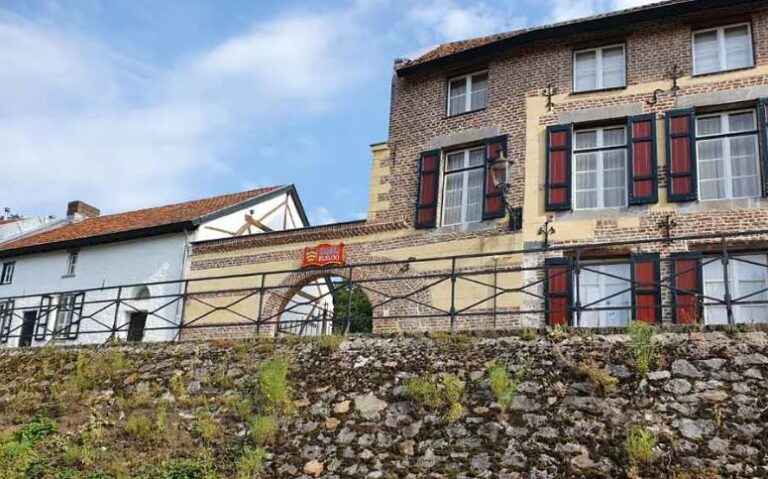
The fact that the Meuse Valley is truly a valley is most noticeable in Elsloo. Nestled on the steep transition between the plateau—home to the renowned Bunderbos and Elsloërbos forests—and the valley, Elsloo features steep streets and offers stunning views of the Meuse River at Kotem (BE). The mediaeval fortress of Elsloo once stood right by the river but was lost due to a change in the river’s course. Its remnants were still visible during very low water levels until the 1970s. However, due to slight damming effects in this section of the Meuse, these remnants can no longer be seen. A ‘new’ castle was subsequently rebuilt further east. Today, the Castle of Elsloo, which retains some original elements, serves as a hotel-restaurant. The construction of the Juliana Canal in the early 20th century effectively divided the village of Elsloo in half, leading to the church and the former shipowner’s house (now the ‘History House of the Meuse Valley’) being situated at the edge of the village.
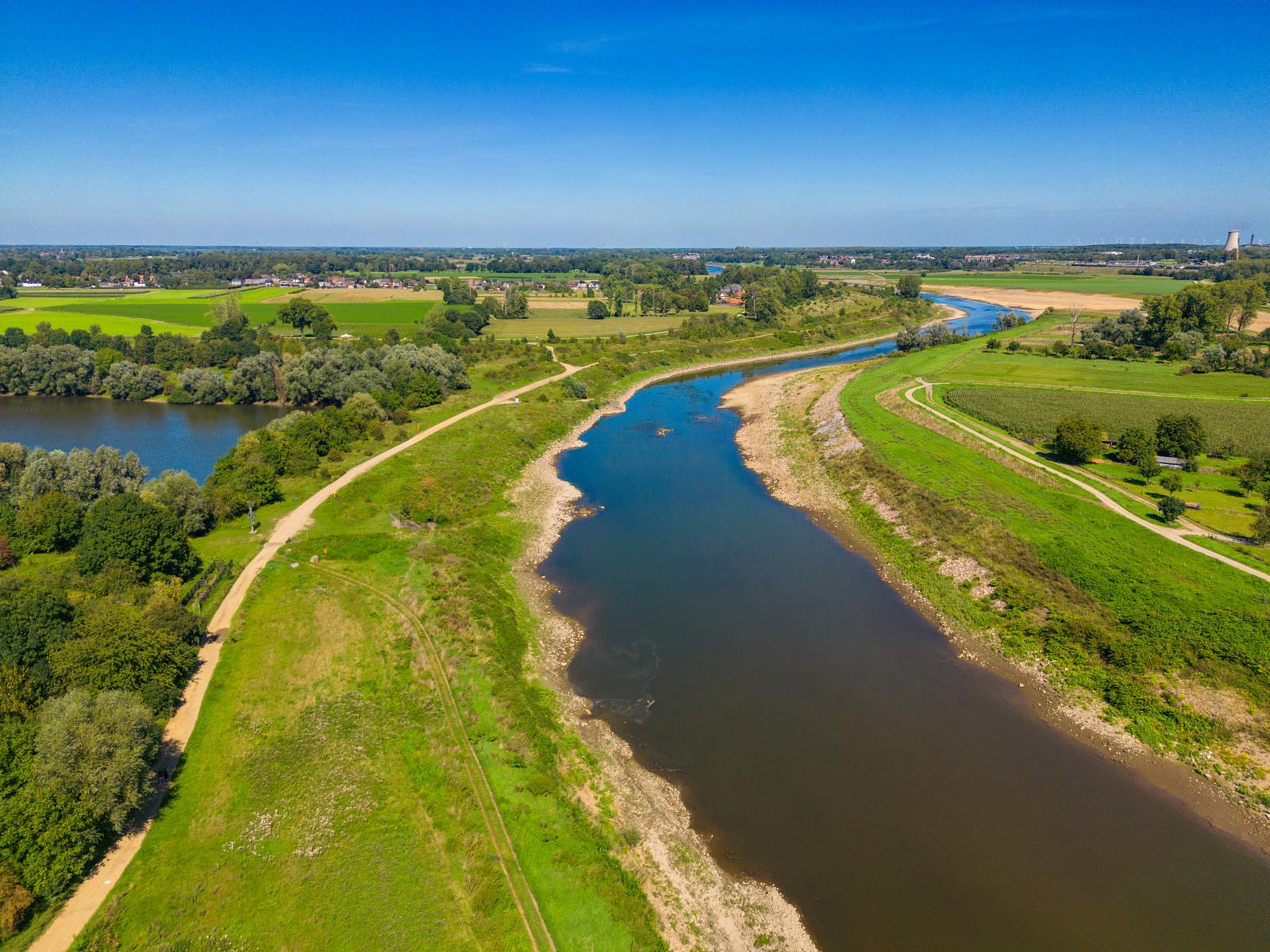
Just downstream from Elsloo lie Meers and Maasband, which are still part of the municipality of Stein, often referred to as the ‘Heart of the Meuse Valley’. The Meuse River here takes a sharp bend around the village, which is nestled between the canal and the river. To mitigate the risk of flooding, a pilot project was initiated in 2008, involving the widening of the riverbed and the lowering of the banks as part of the Grensmaas Project.
Historically, this area has been one of the most dynamic sections of the Meuse, featuring a sudden and steep drop in the river’s course, resulting in a spectacular acceleration of the current. This has created a landscape characterised by spontaneously growing gravel banks, impressive erosion hollows and a peninsula with floodplain forests. Natuurmonumenten currently manages this stunning wild landscape between Meers and Maasband.
And then there’s Urmond, which boasts a beautiful village centre and a rich history of shipbuilding, with a shipowner’s house, a replica of a boat, and a renovated ferry landing that testify to this heritage. If you walk or cycle further downstream, you’ll reach Berg-aan-de-Maas, where the car ferry takes you across the river.
Available activities
Hiking
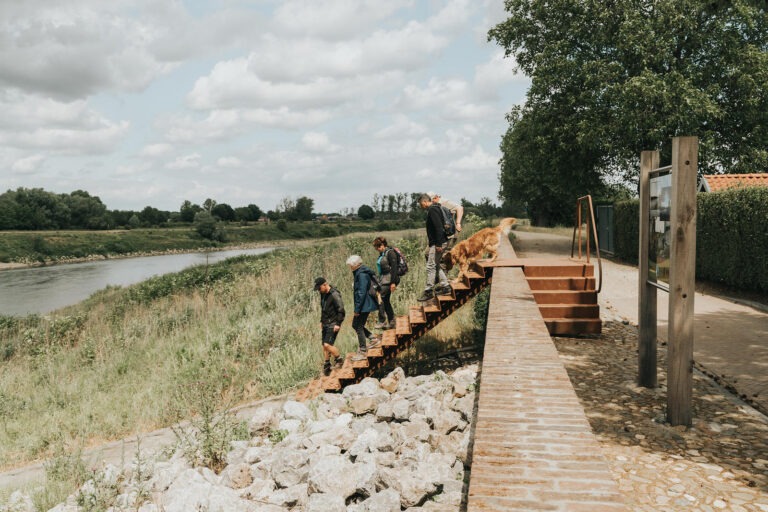
The areas around Elsloo and Meers are perfect for exploring on foot. For those seeking a bit of guidance, here are some recommended routes:
Nature Route Meers-Maasband (13.5 km) Highlights: the Meers Tree Monument, wild river nature, large grazers and Leutherhoek.
- Historical Route Stein-Elsloo (9 km) Highlights: Elsloo Castle, the water mill, farm D’n Hoaf, Mill Pond, the Regional Museum of Elsloo and St. Augustine’s Church.
On the website of Stein, heart of the Meuse valley, , you can find even more great walking routes. You can also download a brochure with more information about the main attractions.
- Set out under the guidance of a MaasVerkenner (Meuse explorere).
Did you know you can refill your water bottle for free at a WML water tap located in both Maasband (at the corner of Leutherhoekweg/Maasbanderkerkweg) and Berg-aan-de-Maas (near the car ferry)?
Cycling
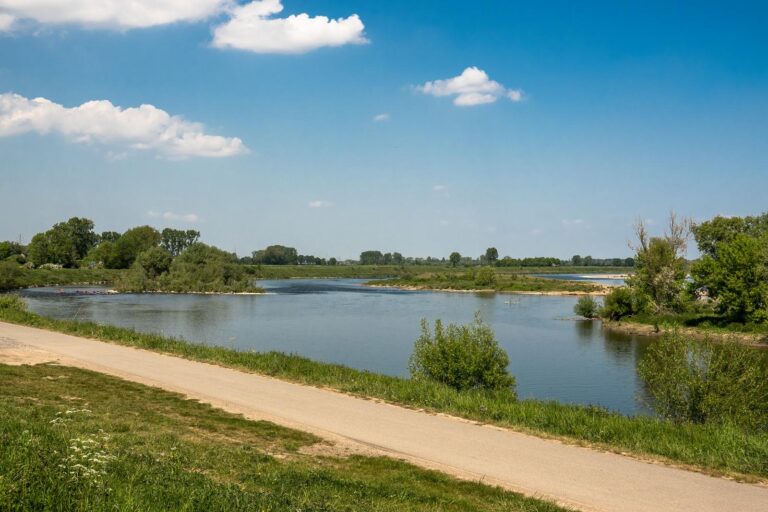
The extensive cycling network connecting Belgium and the Netherlands allows you to plan your own route by following clearly marked junctions in both directions. This way, you can determine which direction to go and how long your ride will be.
During your cycling trip, consider taking a ferry to the other side of the Meuse. This makes cross-border cycling in RivierPark Maasvallei as easy as ever. At junction 41, you can join the cycling route network. You can plan your cycling route using the cross-border thematic cycling map RivierPark Maasvallei.
You can also embark on a bike tour of castles between Stein and Leut.
Points of interest
History House of the Meuse Valley in Elsloo
Castle Ruins of Stein, near Brewery De Fontein
- The botanical gardens at Kasteel Elsloo
- Tree Monument ‘Woodhenge‘ in Meers (Koegrienddijkweg 1)
- A renovated historical bakery where you can enjoy fresh pie: Ut Bakkes in Maasband
- Terras Maasoever, where you can watch the comings and goings at the car ferry.